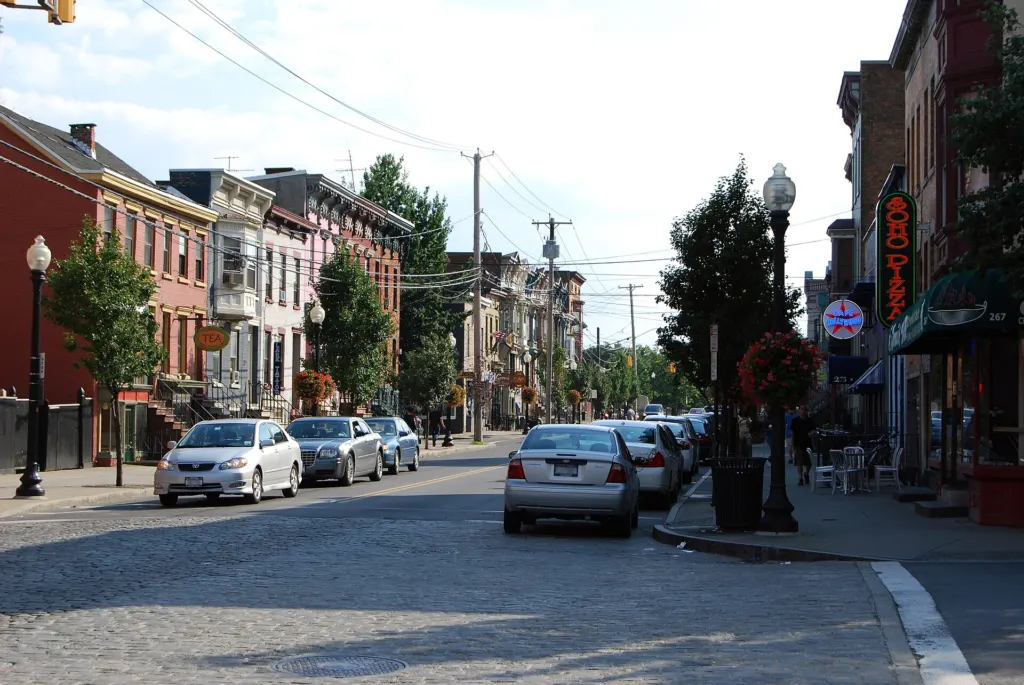
Photo: UpstateNYer / Wikimedia Commons, CC BY-SA 3.0
Opening a business in the Capital Region involves a handful of state and local registrations and, for most owners, a lot of questions. Much of the help available is free. Here is a practical map of where to start.
Free one-on-one advising
Small Business Development Centers. The New York State SBDC network, funded in part by the U.S. Small Business Administration and hosted by SUNY, offers free, confidential advising on business plans, financing, marketing and cash flow. The University at Albany hosts a regional center, and there are centers serving the rest of the Hudson Valley. Advisers can help prepare loan applications and financial projections.
SCORE. SCORE pairs owners with volunteer mentors, many of them retired executives and business owners, at no cost. The Northeast New York chapter serves the Capital Region and runs workshops in addition to mentoring.
SBA. The SBA’s Syracuse district office covers much of upstate New York and lists lenders participating in its guaranteed loan programs, along with women’s business centers and veterans’ business resources.
Choosing a structure and registering
- Sole proprietors and partnerships using a name other than the owners’ own file an assumed name certificate, often called a DBA, with the county clerk where they do business.
- Corporations and LLCs are formed by filing with the New York Department of State’s Division of Corporations. LLCs must also meet New York’s publication requirement, publishing a notice in two newspapers designated by the county clerk and filing a certificate of publication within 120 days.
- Sales tax. Businesses that sell taxable goods or services must register with the Department of Taxation and Finance for a Certificate of Authority at least 20 days before starting.
- Employers need a federal Employer Identification Number and must register with the state for unemployment insurance and withholding, and carry workers’ compensation and disability insurance.
Local permits
Zoning and building permits are local. Before signing a lease, check with the city or town building and planning department about whether the intended use is allowed, and ask about signs, parking and any change-of-use review. Food businesses also need approval from the county health department, and some trades require state licenses.
Industrial development agencies and economic development offices
Each county and several cities have an industrial development agency, or IDA, that can offer sales tax, mortgage recording tax and property tax benefits for qualifying projects, usually larger real estate or manufacturing investments. IDA board meetings and public hearings are open, and project applications are public records. Smaller businesses are more likely to find help from city and county economic development offices, which manage microloan funds and storefront programs in some downtowns, including Troy, Schenectady and Albany.
Certification and contracting
Minority- and women-owned businesses can seek state MWBE certification through Empire State Development, which can open doors to state contracts. Service-disabled veteran-owned businesses have a separate state certification.
A good first week: book a free SBDC or SCORE session, check zoning for the location you have in mind, and sketch a budget that includes registration and insurance costs before any lease is signed.