Photo: brad_bechtel / Wikimedia Commons, CC BY 2.0
Buddy Emmons, who died on July 29, 2015, at 78, was regarded by many musicians as the greatest pedal steel guitarist who ever lived. Over six decades he played on hundreds of recordings, toured with some of country music’s biggest stars and helped shape the design of the instrument he played.
From Indiana to Nashville
Emmons was born in 1937 in Mishawaka, Indiana, and began playing a lap steel guitar as a child. As a teenager he was already performing professionally in the Midwest, and by the mid-1950s he had moved to Nashville. He played in Little Jimmy Dickens’s band and then joined Ernest Tubb’s Texas Troubadours, where his playing reached a national audience through records and the Grand Ole Opry.
Building the instrument
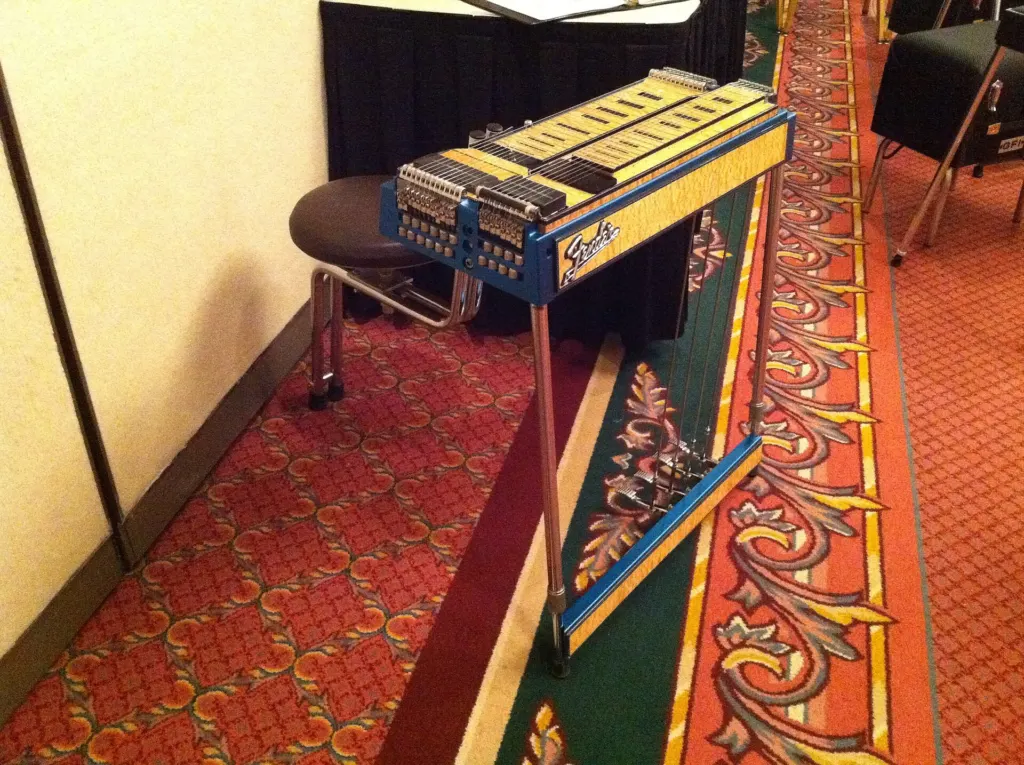
The pedal steel guitar was still evolving in the 1950s, and Emmons was one of the musicians who pushed it forward. With Shot Jackson he co-founded Sho-Bud, one of the most important early pedal steel makers. In 1963 he co-founded the Emmons Guitar Company. Players still discuss the “Emmons setup,” a configuration of pedals and knee levers that became a standard.
A long list of collaborators
In the 1960s Emmons played with Ray Price’s Cherokee Cowboys, one of the defining bands of the honky-tonk era. He later spent time in Los Angeles and played bass in Roger Miller’s band before returning to steel. His studio and touring credits spanned country, rock and pop, including work with Linda Ronstadt and the Everly Brothers. His 1963 instrumental album Steel Guitar Jazz showed the instrument could play bebop, and it remains a reference point for steel players.
He was inducted into the Steel Guitar Hall of Fame in 1981. In the 1990s he toured with the Everly Brothers before largely retiring from the road.
Why players revere him
Steel guitarists point to Emmons’s tone, his speed and, above all, his musical taste: he could play blinding single-note runs or a few spare notes that defined a song. Many of the instrument’s leading players have said they learned by trying to copy his records note for note.
Hearing steel guitar locally
Country, Americana and western swing bands in the Capital Region and Hudson Valley often feature pedal steel, and venues from Albany’s Lark Street area to the Towne Crier Cafe in Beacon book roots acts regularly. The instrument’s distinctive cry is easiest to appreciate live, where you can watch a player’s feet and knees working the pedals and levers.