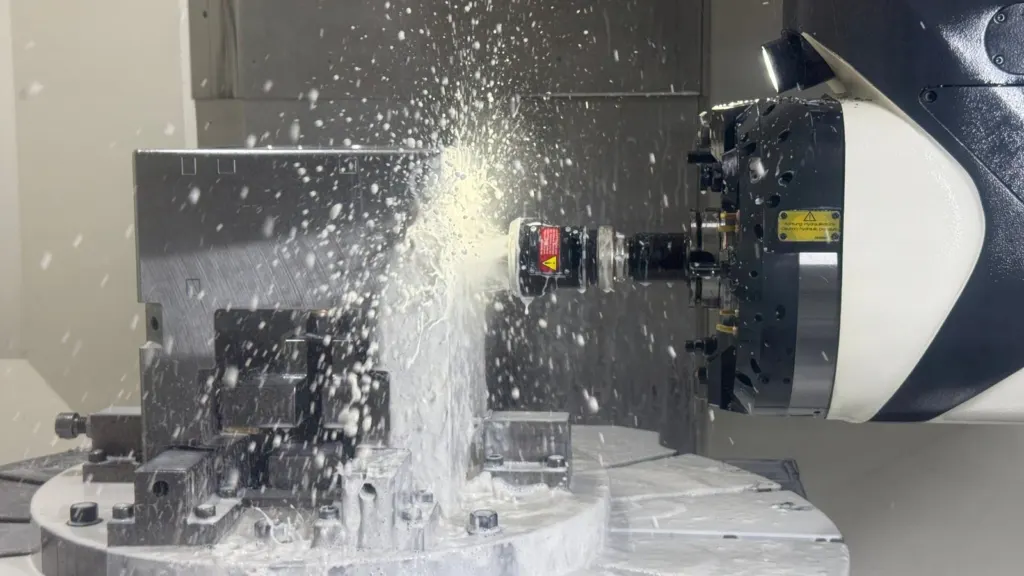
A howitzer component on an automated machine at Watervliet Arsenal. Photo: U.S. Army / DVIDS, public domain
Some of the machines at Watervliet Arsenal now keep cutting cannon parts after the machinists step away. The Army’s cannon and mortar factory on the Hudson says it has cleared “lights-out” machining for production use on parts of the M109 Paladin 155 mm howitzer, a process that runs most of a shift without an operator standing at the machine.
In one validated job, a 12.5-hour machining process needs about 2.5 hours of a worker’s time, mostly for setup, and the machine runs the other 10 hours unattended, the arsenal said in a Nov. 5 release on DVIDS, the Defense Department’s news service. That frees skilled machinists for other work while the equipment keeps going.
For the Capital Region, it is one more sign that the arsenal, founded in 1813, is being rebuilt for a longer run rather than wound down.
What “lights-out” means on the shop floor
The term borrows from factories that can run with the lights off. At Watervliet it is narrower: specific parts, specific machines and processes that have been tested on production material with the arsenal’s usual tooling and quality checks in place. Production leaders have written part-by-part work instructions and finished a first round of training, with more planned in advanced machining, monitoring and quality assurance, according to the release.
“Modernization at Watervliet Arsenal is not an abstract future goal. It is work being applied on the production floor today,” production manager Rob Cavanaugh said in the release. Col. Danilo Green, the arsenal’s commander, called lights-out machining “one example of how our workforce is improving the way we produce critical components.”
NEWS10 ABC, which toured the plant for a Nov. 20 report, reported that the arsenal has cut manufacturing lead time by half, and that a new laser shaft scanner takes more than 300 measurements of a tube in under 30 seconds, an inspection that once took a worker most of a day.
Part of a $1.7 billion, 15-year rebuild
The automation push sits inside the Army Materiel Command’s 15-year, $1.7 billion modernization plan for the arsenal, announced in July 2023 and described by the Army as the largest investment in the post’s history. Visible pieces are already finished.
In April, Army leaders opened the $17.2 million Gillespie Gate on State Route 155, which lets oversized trucks reach the plant without going through city streets, and marked the completion of a mortar factory that moved mortar production under one roof, separate from cannon work that had been spread across the 143-acre production area. They also broke ground on a $39.5 million fire station to replace one built in 1848.
Bigger equipment is still ahead. The Army’s 2023 plan calls for replacing the arsenal’s rotary forge, which shapes gun tubes, and building a larger automated paint booth sized for the longer cannons the Army wants for long-range fires.
Why it matters here
The arsenal is the Capital Region’s link to the Army’s organic industrial base, the government-owned plants that make what private industry can’t or won’t. More capacity from the same machines and floor space puts the arsenal in a better position to take on cannon and mortar work as the Army’s needs change, which is the stated goal of the release. It also changes what the arsenal needs from new hires: fewer people tending a single machine and more who can program, monitor and inspect several.
We profiled the arsenal’s two centuries of gunmaking in October in “Watervliet Arsenal, the country’s oldest working arsenal, still makes big guns.” The plant’s upgrades are landing alongside other big industrial bets in the region, including the $194.8 million wharf awards for the ports of Albany and Coeymans and GlobalFoundries’ second Malta fab. Follow more of that coverage on our Business page.
Next on the arsenal’s list are the new fire station, now under construction, and the forge and paint booth projects. The arsenal has said it will add more training for machinists as lights-out processes spread to other parts.
Add Observer Chronicle as a preferred source on Google (opens in a new tab)