Photo: Ken Lund from Reno, Nevada, USA / Wikimedia Commons, CC BY-SA 2.0
Erastus Corning 2nd took office as mayor of Albany on January 1, 1942, and was still mayor when he died on May 28, 1983. His four decades in office are generally cited as the longest tenure of any mayor of a major American city, and the Albany he governed is still visible in the skyline, the street grid and the politics of the region.
A political family
Corning was born in 1909 into one of Albany’s best-known families. His great-grandfather, the first Erastus Corning, was a 19th-century industrialist and mayor of Albany who became the first president of the New York Central Railroad. The younger Corning graduated from Yale, sold insurance, and entered politics as a member of the Assembly and then the State Senate before winning the mayoralty.
The O’Connell organization
Corning rose within the Democratic organization run by Daniel P. O’Connell, which dominated Albany politics from the early 1920s for half a century. The machine’s control of city and county government, patronage jobs and the local electorate was the subject of repeated state investigations. Corning remained its public face for decades and won reelection ten times.
The Empire State Plaza
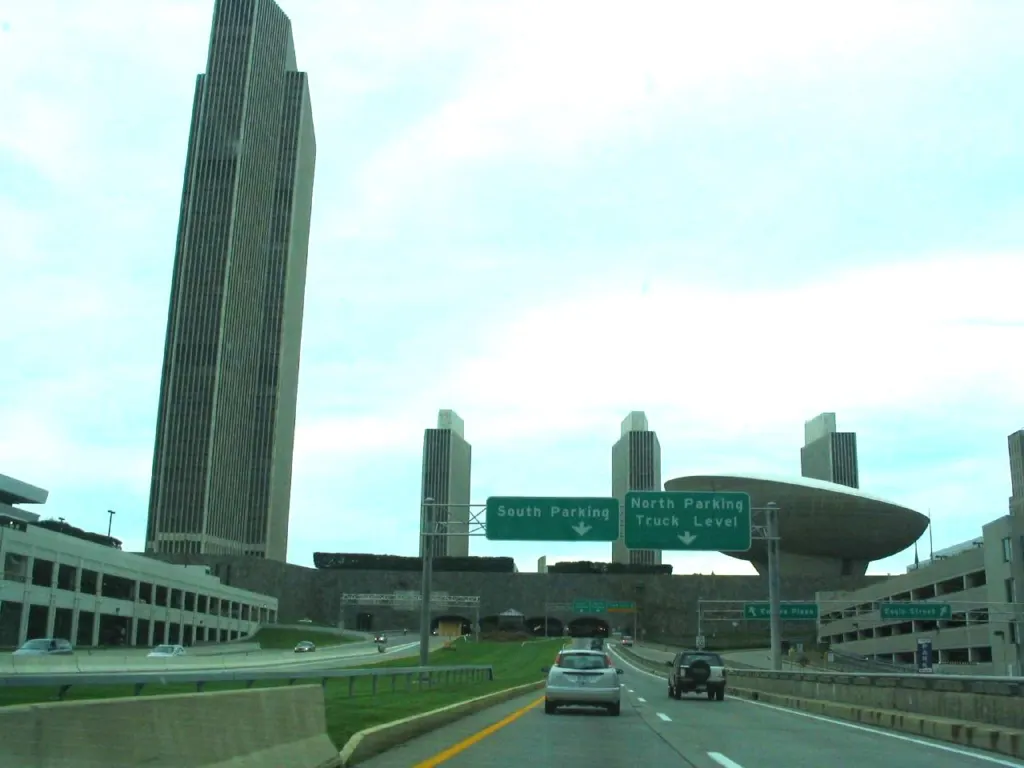
The most visible change to Albany during Corning’s tenure came from the state rather than the city. Governor Nelson A. Rockefeller’s plan for a vast government complex south of the Capitol required clearing a large residential neighborhood in the 1960s. Corning, a Democrat, and Rockefeller, a Republican, reached a financing arrangement under which Albany County issued bonds to build the Empire State Plaza and the state leased the complex, an approach that kept control of the project and its financing close to home. The plaza’s tallest building, completed in the 1970s, is named the Erastus Corning 2nd Tower, and it remains the tallest building in New York outside New York City.
A long list of firsts and lasts
Corning served through World War II, the postwar suburban boom, urban renewal, the construction of Interstate 787 along the Hudson riverfront and the fiscal strains of the 1970s. He ran for lieutenant governor in 1946 on the Democratic ticket and lost. His only serious later challenge in a mayoral primary came in the 1977 Democratic primary, which he won.
Supporters credited him with keeping property taxes low and the city’s finances steady; critics pointed to the machine’s control of jobs and assessments and to the loss of neighborhoods to highway and state construction. Both views are a matter of public record, and both shape how Albany remembers him.
Where his name appears today
- The Corning Tower at the Empire State Plaza, which has a public observation deck on the 42nd floor.
- Corning Preserve, the riverfront park along the Hudson in downtown Albany, reached by a pedestrian bridge over I-787.
- The Erastus Corning 2nd papers and related collections, held by the Albany Institute of History & Art and the city and state archives, which are open to researchers.
Corning was succeeded as mayor by Thomas M. Whalen III.