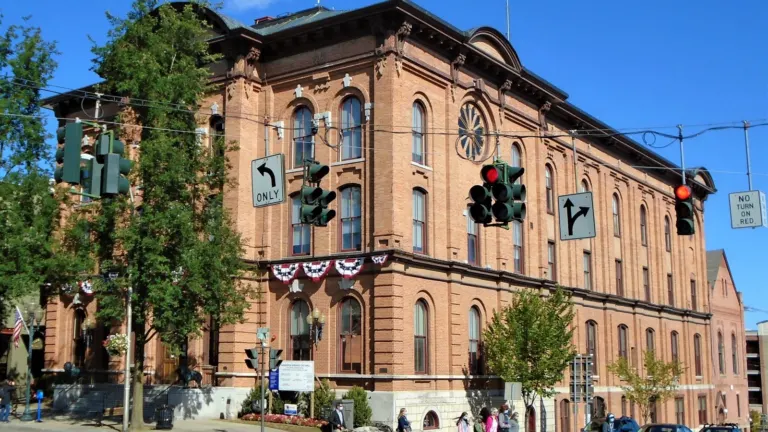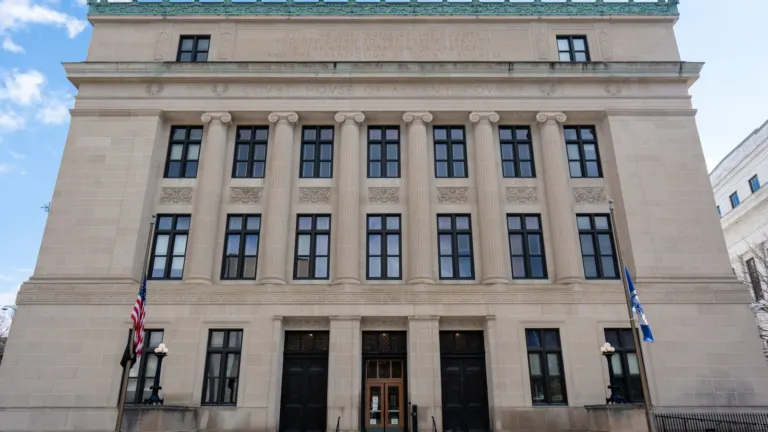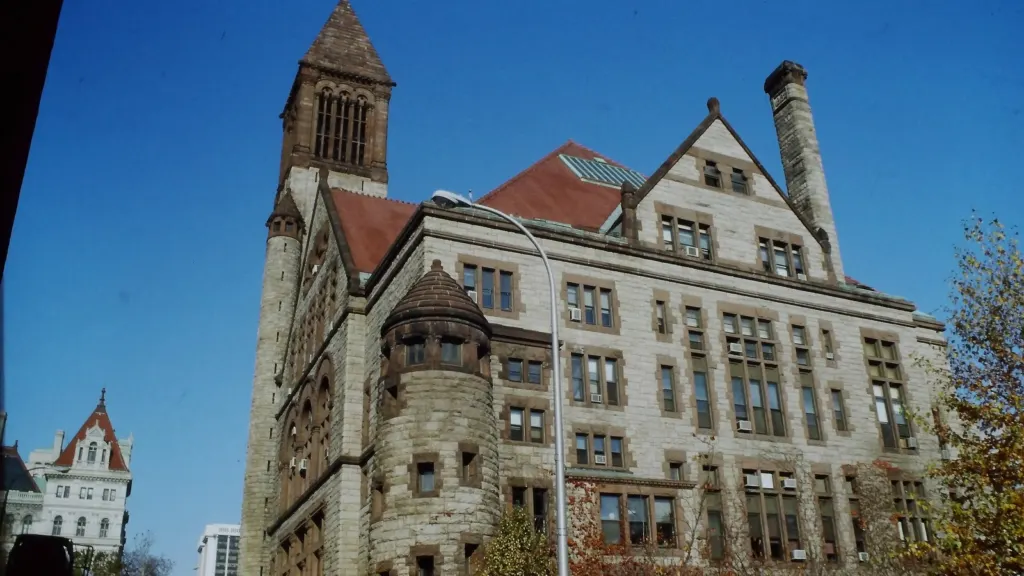
Albany City Hall, where the Common Council meets Nov. 30 to adopt the 2027 budget. Photo: Bmzuckerman / Wikimedia Commons, CC BY 4.0
The Albany Common Council will meet in an emergency session at 5:30 p.m. Monday, Nov. 30, the last day the city charter allows it to adopt a 2027 budget. The meeting notice limits the session to five pieces of legislation, and the order they come up in matters as much as the budget itself.
Mayor Dorcey Applyrs’s spending plan, presented Oct. 1, depends on a property tax increase of about 15%. That is well above what New York’s tax levy limit allows, so the council has to vote to override the cap before it can pass a budget that relies on the extra revenue. We outlined the deadline earlier this month; here is what is actually on Monday’s agenda.
Two override laws, two different ceilings
The council is not voting on a single tax cap override. It has two in front of it:
- Local Law U, sponsored by Council Member Sergio Adams of the 7th Ward, would let the city exceed the levy limit by $5,440,432, capping the increase at 13.5%.
- Local Law V, introduced by Finance Committee Chair Meghan Keegan on the committee’s behalf, would allow $4,472,107 above the limit, a 12% ceiling.
Each law needs 60% of the council, or 9 of its 15 members, to pass. The supporting memos note that an override must be adopted before the budget ordinance, and that if no override passes, “the budget must be rebalanced to the levy limit.” Both laws authorize a higher levy but do not require one.
Neither version matches the mayor’s 15%. According to reporting by WAMC, a 13.5% increase would raise about $1 million less than the mayor’s plan and a 12% increase about $2 million less. City department heads told reporters last week that anything below 15% would affect services such as trash pickup, water and road salting, while Council Member Owusu Anane said he backs 13.5% and wants the city to trim contracted services and press the state for payments tied to the Harriman Campus.
The rest of the agenda
Ordinance 16.101.26 would adopt the budget “as presented by the Mayor on October 1.” A separate resolution, 123.111.26R, sets out the council’s findings and intended changes, which the council says came after more than 11 meetings, sessions with 10 department heads and two public hearings.
The fifth item is a routine but important resolution splitting the tax base between homes and businesses. It sets the homestead share of Albany’s 2026 assessment roll at 53.47219% and the non-homestead share at 46.52781%, the proportions used for tax bills payable in January 2027.
Keegan has acknowledged the council’s limits. “Even if it was supported by a majority vote in the body, we definitely don’t have the votes to withstand the mayor’s veto,” she told WAMC.
How to weigh in
The meeting is in the Common Council Chambers on the second floor of City Hall and includes a public comment period. Residents can sign up in person before the meeting, use the city’s online public comment form, which opens 30 minutes before the start, or email written comments to commoncouncil@albanyny.gov.
Albany is not alone. Schenectady already passed a budget with a 14% tax increase, and Saratoga Springs is weighing an 18% rate hike with firefighter layoffs. Albany has also borrowed $10 million against future sales-tax revenue to pay its bills this year.
Add Observer Chronicle as a preferred source on Google (opens in a new tab)