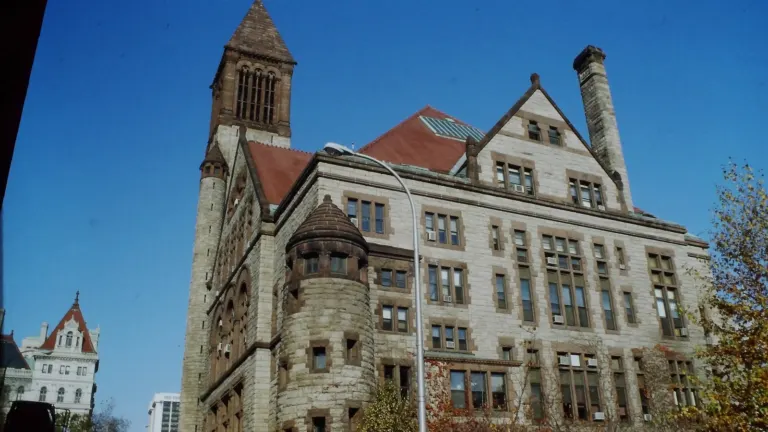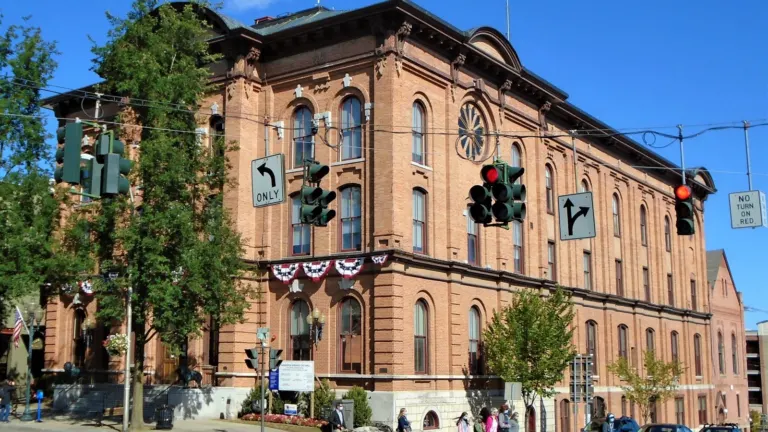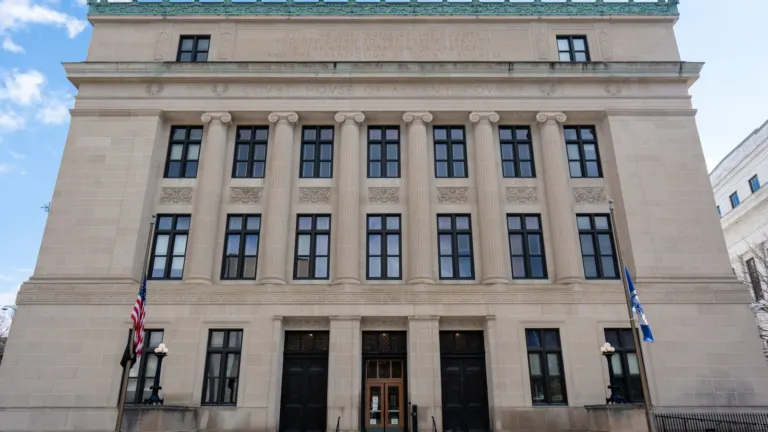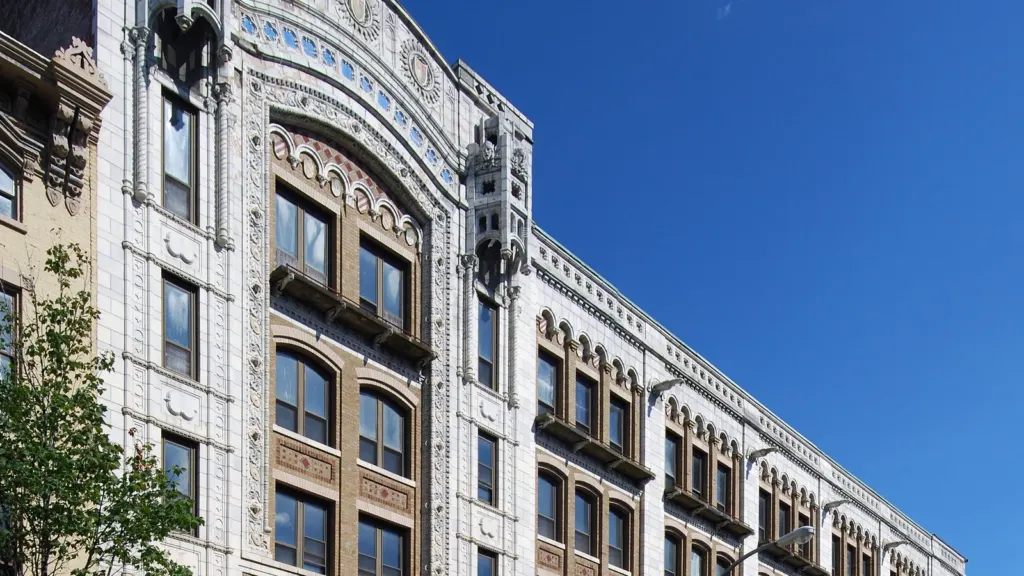
The former Proctor's Theater in downtown Troy, home of the city's permanent City Hall. Photo: UpstateNYer / Wikimedia Commons, CC BY-SA 3.0
Troy residents get one last chance to speak on the city’s 2027 budget at a final public hearing Monday, Nov. 30, at 6 p.m., and the City Council is scheduled to adopt the spending plan the next evening. The plan carries a 3.4% property tax increase and higher water and sewer rates starting Jan. 1.
The Council’s Finance Committee meets in special session at 5:30 p.m. Tuesday, Dec. 1, followed by a 6 p.m. special meeting of the full Council, according to the agenda packets posted Nov. 25. Both meetings are held in person and streamed on the Council’s YouTube channel, with remote comment by Zoom.
Under the city charter, the Council can adopt Mayor Carmella Mantello’s recommended budget or amend it. If it does neither, the mayor’s budget takes effect anyway, City Comptroller Michael McNeff and Finance Director Gabrielle Mahoney note in a memo to the Council.
What the tax bill looks like
The levy ordinance sets $30,699,026 as the amount Troy needs from property taxes in 2027 and levies a total of $31,049,026 on taxable property. The extra $350,000 is the margin the levy carries to produce the revenue the budget requires, as the comptroller’s memo describes it.
When she released the plan Oct. 10, Mantello said the 3.4% increase stays under the state tax cap and works out to about $7.12 a month for the owner of a $150,000 property.
Spending is spread across five funds in the resolution before the Council: $95.1 million in the general fund, $16.5 million for water, $5.1 million for sewer, $6 million for garbage and $8.7 million for debt service, about $131.4 million in all. The general fund figure differs by $200 between the resolution and the comptroller’s memo, $95,136,330 versus $95,136,130, a small discrepancy in the city’s own paperwork.
Water and sewer rates
A separate ordinance raises the city water rate from $4.93 to $5.43 per 1,000 gallons, a 10% increase. Because Troy’s sewer charge is set as a share of the water rate, and that share rises from 75% to 78.59%, the sewer rate climbs from about $3.97 to $4.27 per 1,000 gallons. The minimum quarterly sewer bill, based on 5,000 gallons, rises with it.
The two documents put different price tags on the change. Mantello’s October announcement said the water increase would cost an average family of four about $5.43 per quarterly bill, and tied it to rising orthophosphate treatment costs for corrosion control and lead pipe replacement. McNeff’s Nov. 25 memo, which counts the sewer increase too, estimates about $13.91 more per quarter for a family of four, and cites salaries, benefits, water treatment chemicals and aging pipes.
What else is in the plan
The administration says the city’s surplus has grown to $1.2 million and that most hiring outside police and fire is paused. It is also trying to renegotiate Troy’s sales tax agreement with Rensselaer County and exploring wholesale water contracts.
The budget covers the first full year of operations at the permanent City Hall in the former Proctor’s Theatre, which the mayor’s office says will cut about $100,000 a year in costs, and the planned spring 2027 completion of the new Lansingburgh Fire Station No. 1. The city says it has replaced more than 800 lead pipes since 2024 with about $35 million in federal and state money.
Troy’s increase is modest next to its neighbors. Schenectady passed a 2027 budget with a 14% tax increase, Albany’s Council faces its own Nov. 30 budget vote with a tax cap override, and Saratoga Springs is weighing an 18% rate hike and firefighter layoffs. More on local budgets and taxes is in our Finance section.
The new water and sewer rates take effect Jan. 1, 2027, if the Council approves them Tuesday.
Add Observer Chronicle as a preferred source on Google (opens in a new tab)