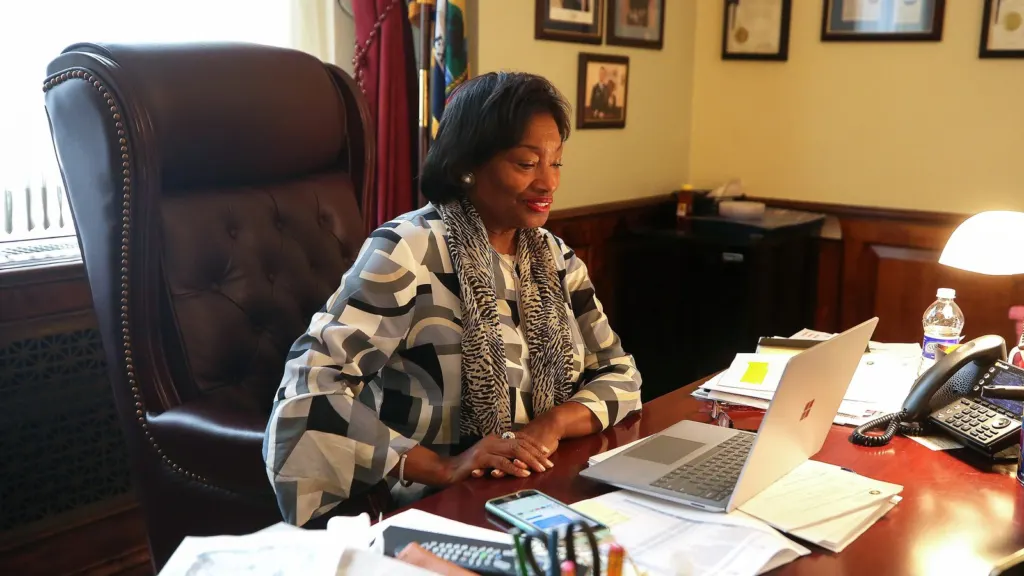
Senate Majority Leader Andrea Stewart-Cousins in her office in March 2020. Photo: New York Senate Photo / Wikimedia Commons, CC BY 2.0
Andrea Stewart-Cousins’ death leaves the New York State Senate without a leader five weeks before lawmakers return to the Capitol, and state law does not say who takes her place. Her office announced Friday, Nov. 27, that the Yonkers Democrat and Senate majority leader had died at 76.
For the Capital Region, home to the Capitol and the state workforce that carries out what the Legislature passes, the question now is how the chamber picks a new leader and how quickly Westchester’s 35th District gets a senator again. The answers come from the state constitution, the Senate’s own rules and two state laws.
“It is with profound sadness that I announce the passing of New York State Senate Temporary President and Majority Leader Andrea Stewart-Cousins,” Senate Democratic spokesperson Mike Murphy said in a statement Friday. Gov. Kathy Hochul said in her own statement that she would never forget “the honor of introducing Andrea as Majority Leader for the first time in 2019.”
No automatic successor in the Senate
Unlike the governor’s office, where the lieutenant governor steps up, the Senate has no line of succession. Under Article III, Section 9 of the state constitution, senators choose a temporary president by majority vote, and the Senate’s rules make that person the majority leader. In practice, the Democratic majority settles on a candidate privately before a floor vote.
The deputy majority leader does not move up on his own. That post is changing hands anyway: Sen. Mike Gianaris did not seek reelection, and Sen. José M. Serrano was picked this month to replace him. “It is not a straight succession plan,” Murphy told Nexstar’s Capitol bureau, as reported by NEWS10, adding that the conference would be “discussing next steps regarding leadership.”
The stakes are large. The temporary president chairs the Rules Committee, appoints every committee chair and member, decides which bills reach the floor and sits in the room for budget talks with the governor and Assembly speaker. Under Article IV of the constitution, the post is also second in line to become governor, after the lieutenant governor.
Senate Democrats held an emergency conference meeting Friday afternoon, and succession was not discussed, City & State reported. The conference’s annual retreat is expected in early December.
Who runs the Senate’s business until January
Because the vacancy came between sessions, Section 33 of the Legislative Law gives the chair of the Senate Finance Committee, Manhattan Sen. Liz Krueger, limited powers in place of the temporary president. Those cover approving vouchers, directing legislative spending and handling staff appointments and pay. That authority lasts until Jan. 1. The Legislature convenes in Albany on Jan. 6, when the full Senate can elect a new temporary president.
A wrinkle hangs over that vote. Senate Rule IV caps service as temporary president at eight years. Stewart-Cousins had led the chamber since 2019, and Democrats agreed this month to change the rule so she could stay on. Changing a standing rule takes a resolution from the Rules Committee and a three-fifths vote of all elected senators, so the January session will also settle whether the limit stays for her successor and for committee chairs.
A special election for the 35th District
Stewart-Cousins won reelection Nov. 3 to a new two-year term that starts Jan. 1. Under Section 42 of the Public Officers Law, a vacancy created when an officeholder dies before a new term begins is filled by special election. The governor has 10 days from the vacancy to issue a proclamation, and the election is held 40 to 50 days after that. On that schedule, the district, which takes in Yonkers, Greenburgh and nearby Westchester communities, would vote in mid- to late January, after the session opens.
As of Saturday morning, no date had been announced for the 35th.
Democrats are expected to hold 48 of the chamber’s 63 seats next year, so the vacancy does not threaten the majority. It does mean the vote for a new leader may happen with one Democratic seat empty.
A leader with deep ties to the Capitol
Stewart-Cousins, who grew up in public housing, won her seat in 2006, became minority leader in 2012 and took the majority leader’s job in 2019, the first woman and first Black woman to lead the state Senate. In her first session as leader, the Senate passed the Reproductive Health Act, new rent laws and the state’s climate law. Attorney General Letitia James called her “a trailblazer who grew up in public housing and became the first Black woman to lead the New York State Senate.”
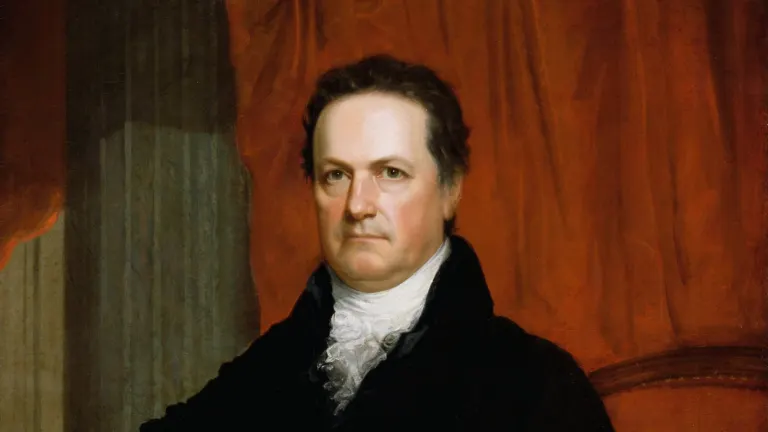
She is one in a long line of officials whose decisions in Albany shaped the region, a line our Local Leaders section has followed back to DeWitt Clinton and the Erie Canal. For more on what the Legislature does next, see our Politics & Albany coverage, including the state’s new 7-OH kratom limit that takes effect in February.
The next markers are Hochul’s proclamation, due by early December, and the Democratic conference’s retreat. The full Senate is scheduled to return to Albany on Jan. 6.
Add Observer Chronicle as a preferred source on Google (opens in a new tab)